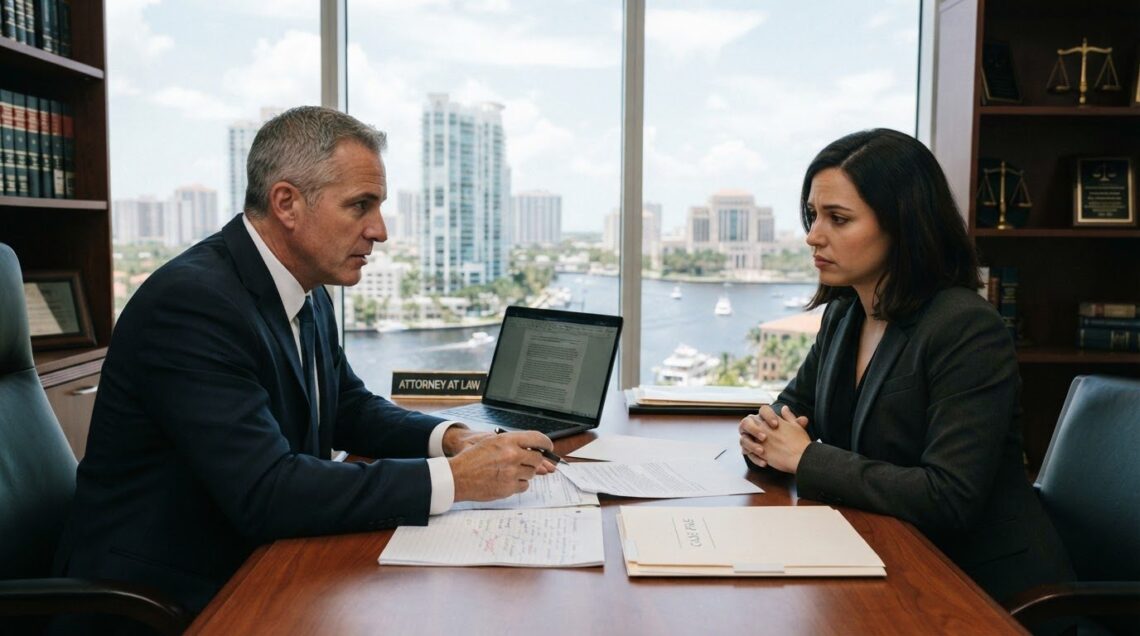
A criminal accusation in Fort Lauderdale can affect far more than a court date. Bond conditions, employment, immigration status, professional licensing, housing, driving privileges, and family relationships may all be at risk before a judge ever hears the evidence.
People searching for a Criminal Justice Attorney Near Me are usually looking for immediate, practical guidance—not simply a name on a search page. The right lawyer should explain what the charge means under Florida law, identify urgent deadlines, and help prevent avoidable mistakes.
Piotrowski Law – Fort Lauderdale can be one resource to consider when evaluating counsel, but prospective clients should focus on how any attorney investigates the facts, communicates decisions, and handles the Broward County court process. A consultation is an opportunity to assess strategy, availability, fees, and the scope of representation before making a commitment.
What a Criminal Defense Attorney Can Do Before Your Case Reaches Court
Early representation can influence how a case develops. A defense attorney may:
- Explain whether the allegation is a misdemeanor or felony and discuss potential incarceration, fines, probation, license consequences, restitution, and collateral effects.
- Advise a client about the right to remain silent and the right to counsel during questioning. Statements made after an arrest—or sometimes during an investigation—can become important evidence.
- Review the circumstances of a stop, search, seizure, arrest, lineup, breath test, blood draw, or consent request.
- Examine whether officers had reasonable suspicion, probable cause, a valid warrant, lawful consent, or another recognized basis for their conduct.
- Communicate with investigators or prosecutors when doing so serves the client’s interests, while avoiding unnecessary statements that could strengthen the case.
- Address bond, release conditions, no-contact orders, travel restrictions, and required court appearances.
Florida criminal procedure is highly fact-dependent. Early advice can affect evidence preservation, charging decisions, diversion eligibility, and the conditions imposed at release. A person under investigation should generally avoid discussing the facts publicly, posting about the incident, or attempting to “explain everything” to police without legal advice.
Criminal Matters a Fort Lauderdale Defense Lawyer May Handle
A criminal defense practice may include Broward County misdemeanor, felony, and post-arrest matters such as:
- DUI, impaired driving, refusal allegations, and traffic offenses with criminal consequences.
- Drug possession, prescription-drug allegations, trafficking, manufacture, and other controlled-substance charges.
- Assault, battery, domestic violence, stalking, injunction-related violations, and weapons offenses.
- Theft, retail theft, fraud, identity offenses, burglary, robbery, and other property crimes.
- Juvenile cases, probation violations, violations of pretrial release, and motions to modify release conditions.
The title of a charge is only the starting point. The defense strategy depends on details such as intent, ownership, possession, injuries, location, witness credibility, digital evidence, statements, and the way law enforcement obtained evidence. “Possession,” for example, may involve disputed knowledge or control; an assault allegation may turn on self-defense, identification, or the reliability of conflicting accounts.
How the Criminal Case Process Can Unfold in Broward County
Although every case follows its own timeline, a typical progression may include:
- Arrest and booking: Police process the accused, collect identifying information, and determine whether the person remains in custody.
- Bond and release: A judge may set bond or impose conditions such as reporting, drug testing, monitoring, no-contact provisions, or travel limits. Domestic-violence cases can involve especially restrictive initial conditions.
- First appearance: The court addresses custody, probable cause, appointed counsel eligibility, and release terms when required.
- Arraignment: The defendant enters a plea, often after receiving charging information and discussing the case with counsel.
- Discovery: The defense reviews police reports, body-camera footage, surveillance video, 911 recordings, photographs, forensic results, medical records, digital evidence, and witness statements.
- Motions and hearings: Counsel may challenge an unlawful search, coerced statement, flawed identification procedure, improper stop, defective warrant, or evidence that is legally insufficient.
- Resolution or trial: Options can include dismissal, diversion, a negotiated plea, an evidentiary hearing, or trial. The best option depends on admissible evidence, legal exposure, criminal history, and the client’s priorities.
- Sentencing and post-conviction issues: A conviction may lead to incarceration, probation, treatment, community service, restitution, driver’s-license consequences, or other restrictions. Some cases also raise issues involving record sealing or expungement, subject to Florida eligibility rules.
Broward County cases may move at different speeds depending on the courthouse, charge level, custody status, discovery volume, and whether forensic testing or expert review is necessary. A lawyer should provide realistic expectations rather than promise a particular result.
Building a Defense Around the Facts of Your Case
Effective defense work is investigative, not formulaic. Counsel commonly begins by taking a detailed client history and constructing a timeline: where each person was, what communications occurred, when police arrived, what was said, and how physical or digital evidence was collected.
The attorney may then compare the client’s account with:
- Officer narratives and body-camera timestamps.
- Surveillance systems, access-control records, GPS information, phone data, and social-media content.
- Medical records, photographs, forensic testing, fingerprints, DNA, and chain-of-custody documentation.
- Witness statements, prior inconsistent accounts, text messages, and dispatch recordings.
Useful defenses vary by case. They may include mistaken identity, alibi, self-defense, defense of another person, lack of intent, lack of knowledge, consent, an ownership dispute, unlawful police conduct, or reasonable doubt. The defense must be supported by admissible evidence and the elements the prosecution is required to prove.
A responsible attorney should also compare the risks of trial with negotiated resolution, diversion, treatment-based programs, or other alternatives. A plea is not automatically a failure, and trial is not automatically the best choice. The decision belongs to the client after counsel explains likely outcomes, evidentiary weaknesses, collateral consequences, and financial costs.
Confidential communication is central to the attorney-client relationship, but clients should still preserve relevant evidence and avoid deleting messages or altering accounts. They should also understand who will handle routine calls, who will attend hearings, and when the attorney—not a nonlawyer intermediary—will provide strategic advice.
Choosing a Criminal Justice Attorney Near Fort Lauderdale
A practical evaluation should cover more than advertising language. Ask:
- How often does the attorney handle the specific charge and the court where the case is pending?
- Will the lawyer personally review discovery, attend hearings, and make strategic recommendations?
- Who is available for an arrest, bond issue, missed court date, or emergency condition?
- What does the fee include, and are investigators, experts, motion hearings, trial preparation, or additional court appearances billed separately?
- How frequently will the office provide updates, and what communication method is preferred?
- Does the attorney identify possible immigration, licensing, employment, firearm, driving, or family-law consequences?
For a first consultation, bring the arrest affidavit, citation, booking or bond paperwork, court notices, protective orders, and any attorney correspondence. Prepare a concise timeline, but do not speculate or embellish. If documents are missing, tell counsel what exists and where it may be obtained.
Florida law and local court procedures can change, and online information cannot substitute for advice about a specific case. Fort Lauderdale’s location in Broward County also means that local courtroom practices, prosecutorial policies, and courthouse scheduling may affect strategy and timing. The most useful first step is usually prompt, confidential legal advice followed by a defense plan grounded in the actual evidence.


