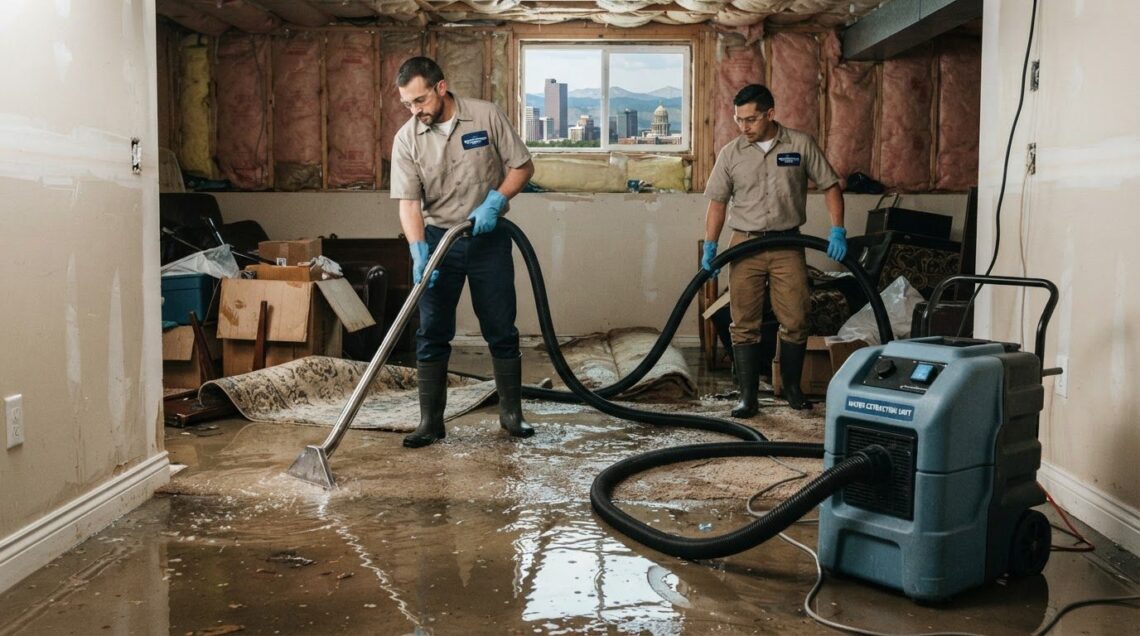
A burst supply line, failed water heater, or sudden storm can turn a dry Denver property into a hazardous cleanup site within minutes. The priority is not simply getting rid of visible water; it is protecting people, stopping the source, and preventing moisture from spreading into building materials and concealed cavities.
Emergency Water Extraction is the controlled removal of standing and absorbed water after a plumbing failure, appliance leak, roof event, or flood. In practice, effective recovery also requires moisture detection, structural drying, cleaning, and documentation—not just pumping out a room.
Homeowners dealing with an active loss can use Restoration Logistics – Denver as a starting point for professional assistance. Until help arrives, treat the property as a potential electrical, structural, and sanitation hazard.
Make the Situation Safe Before Removing Water
First identify the source, but only if doing so does not put you at risk:
- Shut the main water valve for a burst pipe, failed water heater, or appliance supply line.
- Stop an appliance if its controls are safely accessible, then close its water valve.
- Place a temporary container beneath a minor roof leak, but do not climb into an unstable attic or onto a wet roof.
- Keep clear of stormwater entering through doors, windows, foundation walls, or floor drains.
- Never attempt to handle a sewage backup as ordinary household water.
Do not enter standing water near outlets, electrical panels, extension cords, furnaces, washers, or damaged wiring. Electricity should be disconnected at the breaker only when the panel and surrounding floor are dry and accessible. If reaching the panel requires walking through water, leave and call emergency services or a qualified electrician.
Evacuate if there is fire, sparking, a strong gas odor, rapidly rising water, visible ceiling sagging, structural movement, or contamination from sewage or chemicals. In Denver’s freeze-prone winters, a burst pipe may also be accompanied by hidden damage inside exterior walls, crawl spaces, or unheated mechanical areas.
Water classification matters. A clean supply-line break is typically less hazardous than water from a dishwasher or washing machine, which may contain contaminants, while sewage, groundwater, and floodwater require controlled handling and sanitation. Do not track contaminated water through unaffected rooms.
What to Do During the First Few Hours
Once the property is safe, follow a focused response checklist:
- Photograph and video every affected room, material, appliance, and visible waterline before moving items.
- Create a basic inventory of damaged belongings, including approximate age, brand, and purchase information.
- Move portable furniture, rugs, books, electronics, and valuables to a dry area if they are safe to handle.
- Place foil, plastic blocks, or furniture risers beneath legs to prevent staining and wicking.
- Open cabinets and closet doors to improve air circulation, but avoid disturbing swollen materials.
- Keep children and pets away from wet areas.
Do not use a regular household vacuum to collect water. Standard vacuums are not designed for liquid recovery and may create an electrical hazard. Even a wet/dry vacuum is appropriate only for small, clean-water incidents when the user can remain safely outside the affected zone.
Basement flooding deserves special caution. Water pressure against foundation walls can contribute to movement or cracking; rapid pumping may also create pressure differences in some situations. A restoration professional can assess the source, volume, and structural conditions before extraction.
For a ceiling leak, stay out from beneath bulging drywall. A ceiling can contain several gallons of water and may collapse without warning. Water trapped beneath flooring is another common problem: carpet padding, engineered wood, laminate, and subfloors can remain saturated after the surface appears dry.
Delay increases the likelihood of swelling, delamination, staining, corrosion, and microbial growth. Drywall, trim, insulation, hardwood, cabinets, and personal belongings all absorb water at different rates. The longer moisture remains, the greater the chance that salvageable materials become demolition or replacement projects.
How Professional Water Extraction Actually Works
A qualified team begins with an inspection rather than immediately placing fans. The workflow generally includes:
1. Source and category assessment
Technicians identify where water entered, whether the source is controlled, how long materials were exposed, and whether the water is clean, gray, or contaminated. They document affected rooms, likely migration paths, contents, and safety concerns.
2. Bulk-water removal
Standing water may be removed with submersible pumps, truck-mounted extractors, portable extraction units, or commercial wet vacuums. Truck-mounted equipment can provide high-capacity recovery, while portable systems are useful in upper floors, tight access areas, or properties without suitable vehicle access.
Carpet wands and specialized extraction tools remove water from textiles and flooring. The goal is to reduce the moisture load quickly without spreading contamination or damaging materials through excessive agitation.
3. Moisture mapping
Visible dryness is not proof of structural dryness. Technicians use pin and pinless moisture meters, thermo-hygrometers, and, where appropriate, infrared cameras to identify moisture in:
- Subfloors and carpet padding
- Wall cavities and insulation
- Cabinet bases and toe kicks
- Hardwood flooring and trim
- Crawl spaces, attics, and mechanical chases
Readings are compared with unaffected areas or accepted material targets. This helps determine whether selective demolition is needed to expose trapped moisture.
4. Structural drying
Air movers increase evaporation at wet surfaces, while dehumidifiers remove vapor from the air. Refrigerant dehumidifiers are common in moderate conditions; desiccant systems can be useful in colder or unusually damp environments. Ventilation may help when outdoor conditions are favorable, but opening windows in a cold, humid, or smoky environment can slow drying.
Technicians monitor temperature, relative humidity, and material moisture over time. Extraction removes bulk water; drying and mitigation address residual moisture, odor, contamination, and secondary damage.
When Emergency Extraction Is Necessary
Call an emergency water-removal team promptly when you have:
- Rapidly spreading or continuously flowing water
- Sewage, groundwater, or gray-water intrusion
- A flooded basement, crawl space, or utility area
- Water near electrical systems or HVAC equipment
- Saturated drywall, insulation, hardwood, or subflooring
- Visible ceiling sagging, cracking, or structural movement
- Moisture that has traveled beneath flooring or inside walls
Professional response remains important even after visible water disappears. Hidden moisture can support mold, bacteria, odor, fastener corrosion, swelling, and material deterioration. Mold may develop quickly under favorable conditions, especially in enclosed spaces with limited airflow.
Contaminated water requires more than drying. The response may involve containment, personal protective equipment, controlled removal, disposal of porous materials, antimicrobial cleaning, and sanitation. Never mix household chemicals or apply disinfectants without following the product label and appropriate safety guidance. OSHA requirements and applicable local disposal rules may affect how contaminated materials are handled.
Timing, Cost, and the Path to Restoration
Small, accessible clean-water losses may be extracted in a few hours. Larger losses can require several visits, and structural drying commonly takes two to five days—or longer for thick hardwood, masonry, concealed cavities, or cold conditions. Reconstruction follows only after moisture targets and safety conditions are confirmed.
The terms are related but distinct:
- Extraction: Removal of standing and readily recoverable water.
- Mitigation: Actions that limit additional damage, including drying, selective demolition, contents handling, and stabilization.
- Cleaning and sanitation: Removal of debris, contaminants, odors, and affected residues.
- Reconstruction: Permanent repairs such as drywall replacement, flooring installation, painting, cabinetry, or electrical work.
Costs vary substantially by size and complexity. As a broad U.S. planning range, a minor clean-water extraction may cost roughly $500 to $1,500, while multi-room losses commonly run $2,000 to $6,000 or more. Sewage, extensive demolition, contents pack-out, crawl-space access, and prolonged equipment rental can push costs beyond $10,000. Denver labor availability, winter access, building layout, and the duration of dehumidification all influence the final invoice.
Before work begins, ask:
- What water category and affected materials were identified?
- What equipment will be installed, and how will drying be verified?
- Is demolition recommended, and why?
- What is included in the estimate versus reconstruction?
- Who documents the loss for insurance, and what records will be provided?
- Are technicians trained in water restoration, contamination control, and workplace safety?
For an insurance claim, retain photographs, videos, receipts, damaged-item inventories, technician reports, moisture logs, invoices, and communications with the insurer. Avoid discarding damaged belongings until they are documented, unless they pose an immediate health or safety risk.
Call an emergency water-removal team when the source is uncontrolled, the affected area is extensive, contamination is possible, or you cannot confidently determine that the property is safe. Fast extraction does not eliminate every repair, but it can reduce the moisture exposure that turns a manageable incident into a major restoration project.

